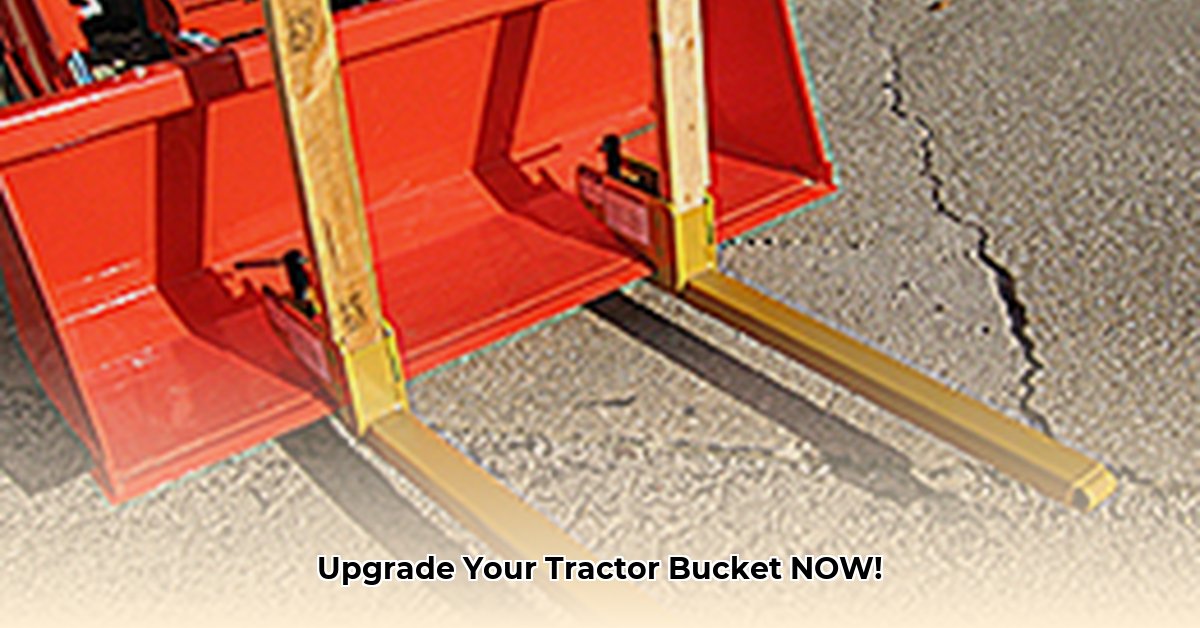
Finding the right bolt-on forks for your tractor bucket can be a challenge. This comprehensive guide cuts through the confusion, helping you choose the perfect set for your needs and budget. We'll cover everything from understanding different fork types to safe installation and maintenance, all while addressing the frustrating lack of consistent product information in the market. For more information on clamp-on forks, check out this helpful resource.
Understanding Bolt-On Tractor Bucket Forks
Bolt-on forks transform your tractor's bucket into a versatile material handler, letting you lift and move pallets, logs, and other awkwardly shaped items – a more economical alternative to a dedicated forklift for many farmers. But what are the key differences, and what should you look for?
Two main types exist: clamp-on and welded. Clamp-on forks (easily attached and removed) offer convenience for occasional use, while welded forks (permanently attached) provide superior strength for heavy, consistent use. The choice depends on your needs and budget. The material also matters. Heavy-duty steel is essential for demanding tasks; lighter materials might be suitable for lighter loads. Crucially, always check the payload capacity (the maximum weight the forks can lift) and fork length, ensuring both are compatible with your tractor and intended use. Incorrectly sized forks compromise safety and efficiency. Consider using a diagram to visualize the differences and proper sizing.
Choosing the Right Forks for Your Needs
Selecting the perfect bolt-on forks involves careful consideration of several factors:
Tractor Compatibility: Ensure the forks' weight capacity remains well below your tractor's lifting limit. Overloading is extremely dangerous. Also, verify compatibility with your tractor's hydraulic system.
Bucket Size: Accurate bucket measurements are critical for a secure and proper fit. Loose forks are a serious safety hazard.
Typical Loads: What will you primarily lift? Pallets? Bales of hay? Logs? The weight and size of typical loads dictate required fork length and strength.
Budget: Prices vary significantly across brands and materials. While cheaper options might be tempting, prioritising durability and safety prevents costly replacements and potential accidents down the line. Is a slightly higher upfront cost justified by superior longevity and safety?
Here’s a simplified decision tree to guide your selection:
                      Heavy Lifting Required?
                         /             \
                        Yes             No
                       /               \
        Welded Forks Necessary?    Clamp-on Forks Sufficient?
           /          \                 /          \
       Yes          No              Yes         No
      /  \         /  \              /  \         /  \
High Cap. Low Cap. High Cap. Low Cap. High Cap. Low Cap. High Cap. Low Cap.
Top Picks & Reviews (with Caveats!)
While we can't definitively endorse particular brands due to inconsistent and unreliable online information, certain factors should guide your selection. Always prioritize brands offering clear specifications, safety certifications (such as CE marking in Europe), comprehensive warranties, and positive feedback from multiple independent review sources. Don't rely solely on a single retailer's feedback; seek out broader opinions to get a true sense of a product's reliability. The lack of standardized specifications and consistent reviews is indeed a significant challenge in this market.
| Brand | Model (Example) | Payload (lbs) (Example) | Fork Length (in) (Example) | Price Range ($) (Example) | Key Features (Example) |
|---|---|---|---|---|---|
| Brand A | ABC123 | 2000 | 48 | 200-300 | Durable steel, easy installation |
| Brand B | XYZ456 | 3000 | 60 | 350-450 | Heavy-duty, longer forks, CE certified |
Important Note: Product inconsistencies necessitate thorough due diligence, confirming specifications from multiple sources before purchasing.
Installation & Safety: A Step-by-Step Guide
Safe installation is non-negotiable. Always consult the manufacturer's instructions.
Preparation: Clear a safe, level work area. Ensure the tractor is securely parked with the engine off. Gather needed tools.
Attachment: Carefully secure the forks to your bucket, ensuring all bolts are tightly fastened and evenly distributed.
Testing: Conduct a test lift with a known weight to verify stability and functionality. Never begin any real work without first conducting this critical test.
Safety First! Always wear appropriate safety gear (gloves, eye protection). Never exceed the rated weight capacity of the forks.
Maintenance & Troubleshooting Tips
Regular maintenance prevents problems and extends fork lifespan.
- Inspect for damage after each use.
- Lubricate moving parts as needed.
- Check bolt tightness regularly.
- Replace damaged parts immediately. Repairing bent forks is risky and is strongly discouraged. Safety should always be the top priority.
Remember, the safest operation is informed operation. Follow safety guidelines, and seek professional assistance if needed. Investing in high-quality tools pays dividends in safety and longevity.